Premium imported fruits & vegetables
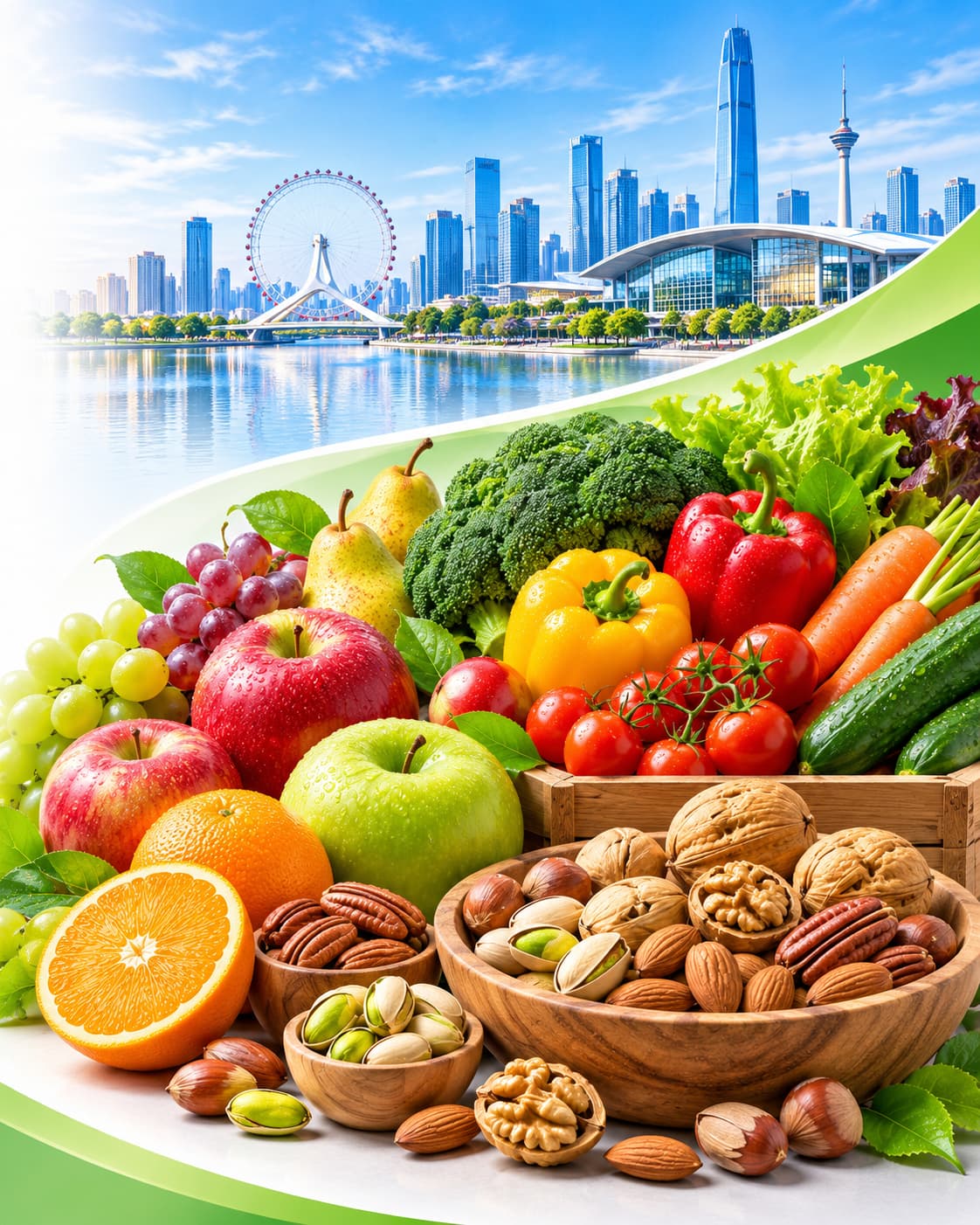
Tropical fruits from Southeast Asia, cherries and blueberries from South America, kiwifruit from Oceania, cold-chain logistics and related technologies.

Tianjin, China TFVE 2027
Connecting global markets, shaping the future of fruit & vegetable and nut.
China's agricultural exports in 2025, above USD 100 billion for a second consecutive year
Planned exhibition area for the 2027 edition
Roasted nut and seed throughput in Wangkou Town, Jinghai District
Approximate share of the national market held by that cluster
Markets buying from Wangkou today
Two-way trade, not another regional fair.
Exhibition overview
China's fruit, vegetable and nut industry is entering a new phase of transformation and growth. Agricultural exports reached USD 104.16 billion in 2025 — above USD 100 billion for the second consecutive year — and processed fruits and nuts have been identified as high-potential export categories under the 15th Five-Year Plan.
At home, consumption upgrade and demand for healthier snacks are pushing the category toward stronger branding, greater sophistication and functional benefits. Tianjin sits at the center of that shift: the port is northern China's largest comprehensive port and a major gateway for imported fresh fruit, while Wangkou Town in Jinghai District is the region's largest roasted nut and seed hub, shipping to more than 20 countries.
Working with industry organizations, Golden Conference & Exhibition Group will host TFVE 2027 on 22–24 April 2027 at the National Convention and Exhibition Center (Tianjin) — the largest exhibition and convention complex in northern China by exhibition space. On a planned 10,000 square meters, the show covers the full value chain, from imported tropical fruit and South American cherries to nut ingredients, roasted products, intelligent sorting, cold-chain preservation, cross-border e-commerce and inspection and quarantine services.
Its positioning is deliberately two-way — premium imported produce on one side, Chinese nuts for export on the other — complementing, rather than repeating, the established shows of southern China.
Why Tianjin
The show is rooted in Tianjin, serves the Beijing-Tianjin-Hebei region, reaches buyers nationwide and connects to global markets.
Tianjin Port is the largest comprehensive port in northern China and a major gateway for imported fresh fruit — the same waterfront the show's inbound trade depends on.
Wangkou Town in Jinghai District is northern China's largest roasted nut and seed production hub: nearly 600,000 tonnes a year, roughly 30% of the national market, exported to more than 20 countries and regions.
The National Convention and Exhibition Center (Tianjin) is the largest exhibition and convention complex in northern China by exhibition space, and provides the event with international-standard facilities.
Purpose of the exhibition
A single platform for trade matchmaking, industry development, international connection, technology exchange and consumer engagement.
Fruit and vegetable shows concentrate in Shanghai and Hong Kong, nut exhibitions in Hefei. Northern China has had no dedicated platform covering both sectors.
Connecting northern production bases and the Jinghai cluster with retail chains, e-commerce platforms, importers and foodservice supply chains — with deals signed on site.
Accelerating the branding and internationalization of Wangkou's roasted nut enterprises and building the regional "Tianjin Roasted Nuts" name.
Moving the sector from bulk trade toward branded, specialized and value-added output, with smart sorting, cold-chain, digital supply chains and new packaging on display.
Using Tianjin Port, RCEP and Belt and Road corridors to connect Southeast Asia, South America, Central Asia and the Middle East in both directions.
New product launches, tasting experiences and public open days that widen the category's place in healthy snacking and functional foods.
Linking production, processing, logistics and consumer markets across Beijing, Tianjin and Hebei to integrate agricultural resources.
Building the city's profile as a northern exhibition destination and agricultural trade hub, and pulling growth into logistics, commerce and tourism.
Major exhibits
Five exhibit groups cover what the industry actually trades, packs, ships and sells.
Tropical fruits from Southeast Asia, cherries and blueberries from South America, kiwifruit from Oceania, cold-chain logistics and related technologies.
Regional public brand pavilions — Shaanxi apples, Gannan navel oranges, Yunnan blueberries, Hainan mangoes — plus fruit and vegetable processing and protected agriculture.
Nut ingredients, roasted nut products, the Tianjin Jinghai Roasted Nut Pavilion, processing machinery and packaging equipment.
AI-powered visual sorting, near-infrared quality inspection, modified-atmosphere packaging, biodegradable materials and digital supply chain solutions.
Overseas trade promotion organizations in China, cross-border e-commerce, logistics and freight forwarding, inspection and quarantine, finance and insurance.
Concurrent events
A conference, technical forums, pre-matched sourcing meetings and a public program — organized around the three days of the show.
Government, research institutions, international organizations and leading retailers exchange views on the trade landscape under the 15th Five-Year Plan, consumption upgrading and brand building, and RCEP supply chain collaboration.
Two tracks on global supply and demand, health-driven product innovation, intelligent processing, and controlled-atmosphere freshness technology.
Separate tracks for imported fruit, nuts and roasted seeds, and fruit and vegetable processing — buyers matched and meetings scheduled in advance. Alongside them: the Tianjin Jinghai roasted nut industry promotion session, and an international buyer briefing on Southeast Asia, the Middle East and Central Asia.
New product launch shows and the “Fruit & Nut Star” selection run throughout. The Public Open Day adds tasting zones and family DIY workshops to carry the category to consumers.
Target audiences
Professional buyers, invited through multiple channels and matched to exhibitors before they arrive.
Buyers meeting the annual purchasing volume requirements receive complimentary accommodation, dedicated meeting rooms and priority matchmaking. Invitations are issued through industry association databases, with exhibitor directories shared in advance — and regional buyer delegations are organized with provincial and municipal commerce authorities.

To book a booth at TFVE 2027 or to discuss participation, write to the organizing committee — the team will follow up with floor plans, exhibit profiles and the buyer matching schedule.
Email the organizerThank you for your enquiry. The organizing committee will reply within 24 hours with floor plans, exhibit profiles and the buyer matching schedule.